Sunday, February 13, 2011

3-2-1 summary

3 Things I Learned:

  1. I learned that laissez faire refers to the economic policy of letting owners of industry and business set working conditions without interference.
  2. I learned that England abolished slavery before the United States.
  3. I learned that industrialization started in Great Britain.
2 Things that interested me:
  1. There were no public schools in many states until the 1850s.
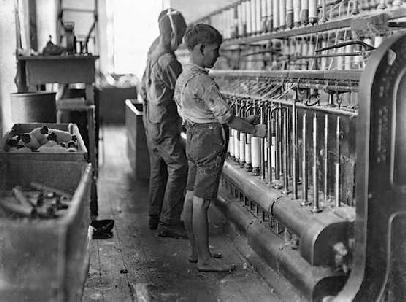
  2. The hours children worked in factories and the conditions they worked in. 
1 Question I still have:
  1. How much did children make working in factories? 

Communism

Communism is an economic system in which all means of production are owned by the people, private property doesn't exist, and all goods and services are shared equally. It was introduced by Karl Marx in The Communist Manifesto. 

Communism still exists in Cuba, China, Laos, North Korea, and Vietnam.

The Abolition of Slavery

The movement to abolish slavery was started by a very religious member of Parliament named William Wilberforce. He wanted to end slave trade and slavery in the British Empire. In 1807 Parliament passed a bill to end the slave trade in the British West Indies. In 1833 the British Empire finally abolished slavery. The United States followed in Great Britain's footsteps and also abolished slavery after the U.S. Civil War except in Puerto Rico, Cuba, and Brazil. Slavery ended in Puerto Rico in 1873, in Cuba in 1886, and in Brazil in 1888.

Saturday, February 12, 2011

The Cell Phone

The Cell Phone was invented by Martin Cooper. The Cell Phone is a device used to make mobile telephone calls across a wide geographic area. Technology has evolved enough that we can not only call someone from anywhere but we can take a picture, record video, or write a message and send it to anyone with a Cell Phone and they will get it in a matter of minutes. We can also browse the internet with Cell Phones. 


The Telegraph

The Telegraph was invented by Samuel F. B. Morse, who also invented Morse code. The Telegraph transmitted electric signals over wires that translated into a message. The Telegraph made it easier to communicate in America during the Industrial Revolution. 


The Spinning Mule

The spinning mule was invented by Samuel Crompton. Crompton combined the spinning jenny with the water frame to make the spinning mule. The spinning mule made thread that was stronger, finer, and more consistent than earlier spinning machines.

The Seed Drill

The Seed Drill was invented by Jethro Tull. The Seed Drill allowed farmers to sow seeds in well-spaced rows and at specific depths. Thanks to the Seed Drill a larger amount of the seed was able to germinate which boosted the crop yields for the farmer.

Introduction

Chapter 9 deals with the Industrial Revolution that took place from the 1700s all the way to the 1900s. This was the period of time where man started to use machines to help them manufacture goods at a faster rate. It all started in Great Britain and quickly spread throughout Europe and to the United States of America.

I hope to learn all about the lives of people throughout the Industrial Revolution and what machines were created to make their jobs a little easier.